
Photography Etiquette Around Sadhus and Rituals
Photography etiquette at Kumbh: asking Naga Sadhus, respecting akharas' camera rules, Ramkund ghat aarti shots, drone and flash cautions.
- · Ask before photographing any Naga Sadhu or sadhu, accept a no, and never pay under pressure for a photo.
- · Some akhara camps and temple sanctums restrict cameras; look for signs and ask the akhara's attendant before you shoot.
- · At Ramkund ghat you may photograph the river, aarti and surroundings but not close-ups of people at pitri tarpan.
- · The Goda aarti is about 6:30-7:00 PM (some sources say 7:00-8:00 PM), a good window for golden-hour light on Ramkund ghat.
Source: Wikimedia Commons
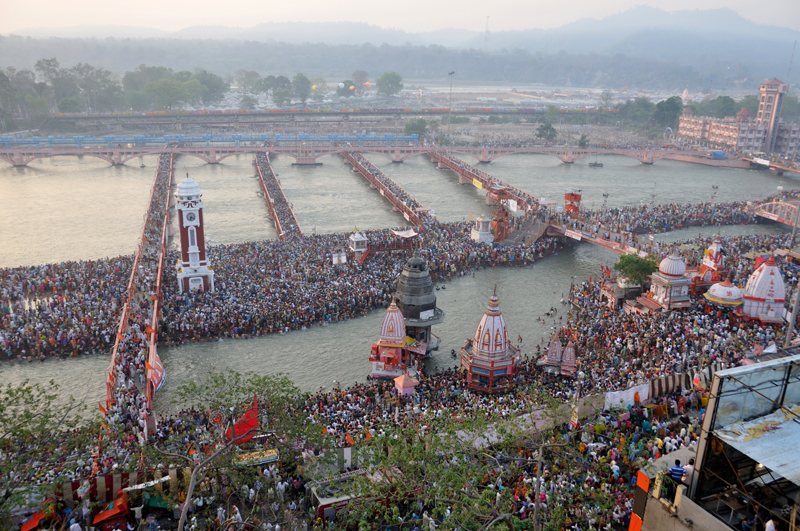
Kumbh is one of the most photographed religious gatherings on earth, but the people in your frame are at prayer. A short, polite question before every portrait keeps both of you comfortable.
Nashik's three Amrit Snan days in 2027 also bring heavy security and restricted zones, so pack light and carry only one camera.
At a glance
- Ask before photographing any Naga Sadhu or sadhu, accept a no, and never pay under pressure for a photo.
- Some akhara camps and temple sanctums restrict cameras; look for signs and ask the akhara's attendant before you shoot.
- At Ramkund ghat you may photograph the river, aarti and surroundings but not close-ups of people at pitri tarpan.
- The Goda aarti is about 6:30-7:00 PM (some sources say 7:00-8:00 PM), a good window for golden-hour light on Ramkund ghat.
Rules of thumb at the ghat and in camps
- Ask each time; tourists who photograph without consent can be asked to delete.
- Do not use flash at aarti or on a Naga Sadhu's face.
- Do not photograph women bathing, children without parents' consent, or ash immersion.
- Skip drone shots; security restricts them near the ghats.
Places and people to frame
- Ramkund ghat (Panchavati, Nashik) — Photograph the river and aarti; avoid close-ups at tarpan and ash immersion.
- Juna Akhara (Kumbh akhara camps, Nashik-Trimbakeshwar) — India's largest akhara; ask its camp attendant before photographing Naga Sadhus.
- Dutondya Maruti, Sita Ghat (Ramkund, Nashik) — Venue of the Goda aarti run by Goda Seva, with the aarti at 6:30 PM.
Gear and logistics
- Carry one camera and a lens; a heavy kit slows you in 2-3 km walks on snan days.
- Keep a lens cloth: Godavari spray and incense smoke dirty lenses.
- Interim dates: 2 August, 31 August and 11 September 2027 at Nashik; 12 September at Trimbakeshwar.
Frequently asked questions
Can I photograph Naga Sadhus at Kumbh?
Ask first with a nod or a namaste, and wait for a clear yes. Naga Sadhus lead the akhara processions on snan days, so avoid blocking the path or using flash close to their faces.
Do akharas allow cameras?
Policies vary by akhara and camp; some restrict cameras in inner areas and during private rituals. Ask the mahant's attendant at the entrance, and do not photograph private rituals without permission.
What can I photograph at Ramkund ghat?
The Nashik Kumbh portal says you can photograph the river, the aarti and the surroundings, but you should not take close-ups of people performing pitri tarpan. Keep steps clear, as the lower stones are slippery.
When is the best light at Ramkund?
The Goda aarti is held about 6:30-7:00 PM according to one portal and 7:00-8:00 PM according to Maharashtra Tourism. Reach the ghat by 6:00 PM for a spot, and use the early Brahma Muhurta glow before sunrise for softer shots.
Sources
- Ramkund Nashik Panchavati - Nashik Kumbh Mela portal
- Goda Aarti - Goda Seva
- Why Hindu akharas lead Amrit Snan - Firstpost